Introduction
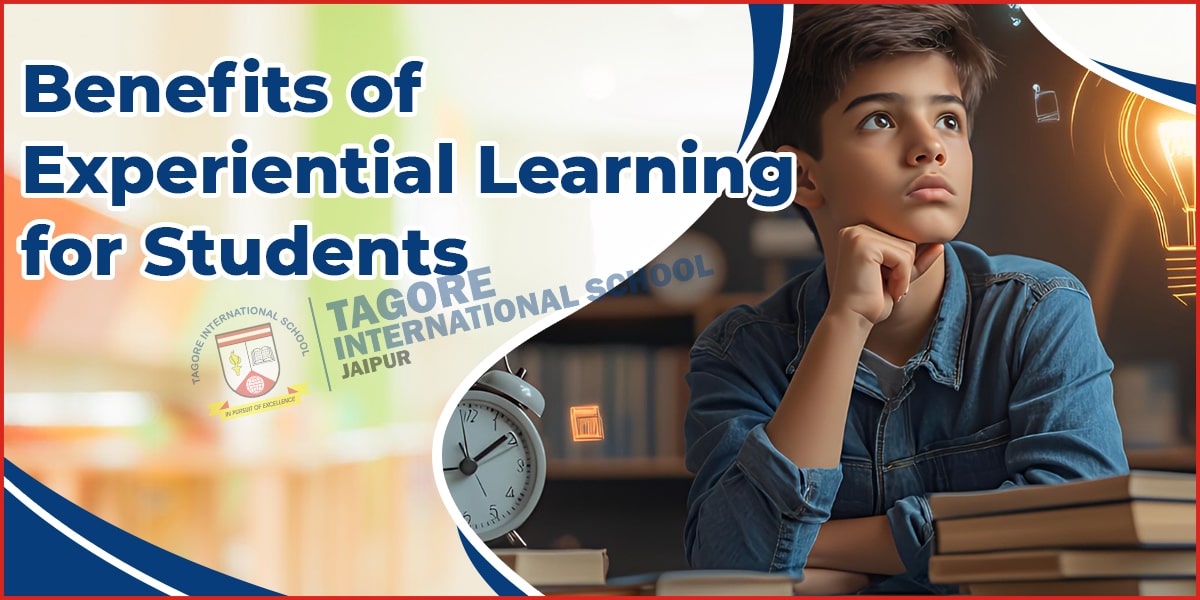
It’s an era of an evolving professional and academic landscapes in which students need to do something extra to build foundational knowledge while preparing for the real-world challenges. Traditional classroom learning experience only prepares the students for examinations, textbooks, and lectures. That’s when Experiential learning comes into the picture.
The benefits of experiential learning for students are plenty, as it lays emphasis on learning through application, experience, as well as reflection. But how exactly does experiential learning equip students with all the essential skills that go beyond theoretical understanding? How is it beneficial for students? Let’s learn more about it here:
Experiential Learning: What is it?
Experiential learning for school students refers to hands-on activities that allow the children to learn while participating in several activities. It is not just limited to memorising or listening but focused on experimentation, observation, exploration, and reflection, helping students gain skills through hands-on activities.
Some of these activities include educational tours, field trips, science experiments, storytelling, group projects, presentations, model-making activities, arts, crafts, and so on.
How Experiential Learning Is Beneficial for Students
Hands-on & Practical Learning:
Experiential education or learning acts as a bridge between practical and theoretical learning, helping students understand concepts that actually work in real-life situations. Such a learning approach prepares the students for the workplace as it exposes real-world challenges and expectations. It benefits students by:
- Improving problem-solving skills while helping them understand complex concepts
- Developing industry-relevant and practical skills, making them career-ready
You can read also:- Discover the Best Montessori School in Jaipur for Your Child's Bright Future
Promotes Engagement, Confidence, and Motivation
When it comes to experiential learning, it helps students actively participate in several real-world tasks and gain hands-on experience. This subsequently helps students gain confidence, self-awareness, and motivation while increasing engagement. The students get a better idea of their strengths, learning styles, and weaknesses. It helps students to:
- Improving their self-confidence, while making them more adaptable and resilient towards any situation.
- Become more active participants, overcome fear of failure, and improve retention.
Develops Cognitive & Communication Skills
One of the most important sets of skills that any student needs to develop is communication, decision-making, and critical thinking skills. These are quite beneficial in helping students analyse situations, making strategic decisions, and communicating ideas clearly.
Experiential learning strengthens analytical abilities and critical thinking while fostering communication and teamwork with collaborative tasks, group discussions, projects, and more. This type of learning encourages students to:
- Becoming more independent in analysing situations and developing creative solutions to problems
- Develop interpersonal and communication skills while helping them handle feedback and conflict constructively.
You can read also:- Why the Best Academic Schools See Failure as a Path to Progress?
Reflective Learning & Practical Knowledge
One of the most significant benefits of this type of learning is developing a growth mindset in students with a practical learning approach. It nurtures the student mindset, which is not just limited to exams in the classroom, but goes beyond it, helping them gain practical knowledge. Experiential learning prepares students to develop skills to fit in the real-world expectations and challenges. The reflective learning approach helps students in:
- Continuous development of skills while promoting adaptability to change.
- Prepare students for future workplace situations with industry exposure and better employment opportunities.
Why Your Child Needs Experiential Learning for a Thriving Future
The importance of experiential learning is significant as it plays a vital role in modern school education. It allows students to gain practical experience and skills that are beyond just mere textbook knowledge. Hands-on learning, early exposure, and developing essential skills are a vital part of building a strong academic and career foundation for students in achieving long-term success.
Modern schools are adopting experiential learning to make learning more engaging, interactive, and inclusive, which nurtures students' growth. This approach is quite beneficial in developing critical thinking, curiosity, and independent learning in students from an early age. This type of learning is quite important across age groups as it:
- Improve students' critical thinking, problem-solving, and communication skills while fostering social interaction.
- Boots engagement with a focus on student-centered learning, helping them learn concepts, preparing them for real-life situations, encouraging career readiness, and grabbing better opportunities in the academic realm.
- Foster creativity and imagination, while supporting emotional and cognitive development.
- Makes learning more engaging, effective, and inclusive in comparison to traditional learning.
Conclusion
In a fast-changing and highly competitive world, children need more than just book knowledge to build a thriving life. The benefits of experiential learning for students are plenty, as it helps students understand concepts by exploring, doing, and applying them in real-life situations. At Tagore International School (TIS), we go above and beyond to foster learning in students beyond textbooks and classrooms through practical learning experiences.
TIS focuses on nurturing students' growth mindset while motivating them to develop teamwork, communication, and problem-solving skills, boosting confidence and helping them become curious learners. We do so with the help of group projects, assignments, hands-on activities, real-world learning experiences, and several other activities.
With us, your child gets a supportive learning environment that prepares them for the future with good values, practical skills, and confidence to succeed at every stage of life.