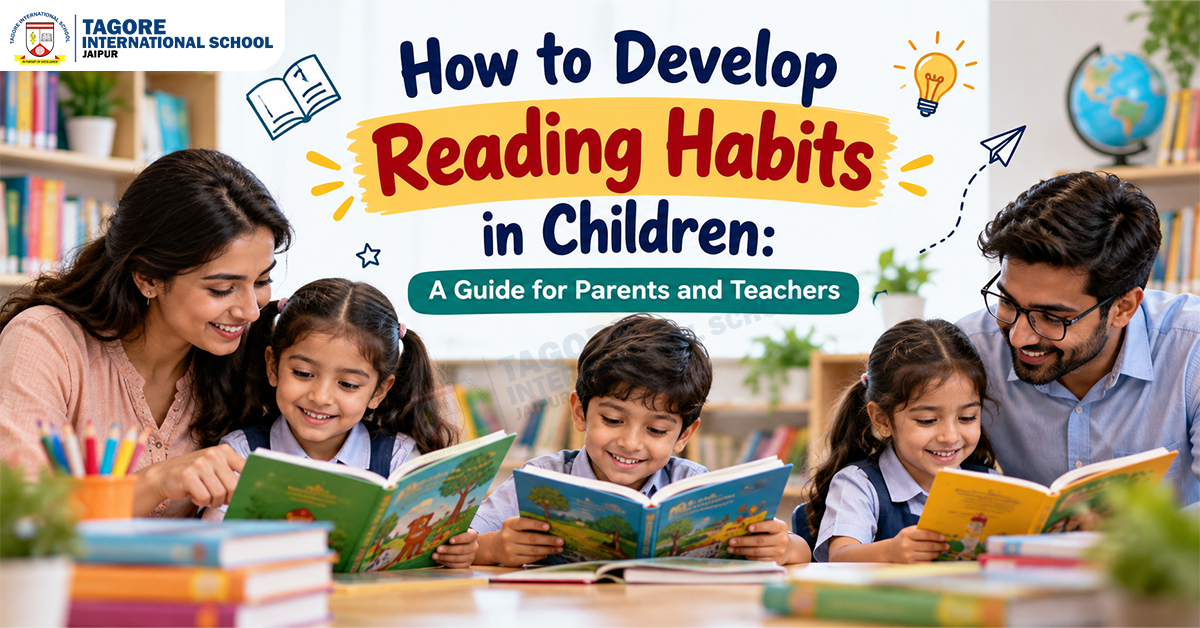
Reading is one of the most important habits which a child should have. It helps students in learning better, getting more knowledge, and increasing creativity. Today, with the increase in use of screens, the reading habit has considerably declined in children. It has become challenging to encourage them to pick a book and read. But following the approach can help children in getting back to reading books.
Why Is Reading Important for Children?
Reading is essential for children as it has many benefits and can help in improving the language skills as well. Reading regularly helps children to experience new things, cultures, ideas and perspectives which can be life changing and insightful.
When children get habitual to reading, they are likely to develop a strong vocabulary, improve comprehension writing skills, strengthen concentration level, develop critical thinking ability, and gain knowledge. They may also become emotionally understanding, and independent learners.
A Guide for Developing Reading Habits in Children
Developing a reading habit in today’s era can be challenging but here are some best ways to help children develop it.
Start Reading at an Early Age
Parents and teachers should motivate students to read books from an early age. They can be introduced to picture books, rhymes, or colorful storybooks with illustrations. This helps them in getting familiar with the words, sentence structure and storytelling.
Let Children Choose Their Books
Not all children may find reading interesting and therefore, it is very important to do things which make it interesting for them. When children select their own books, they will feel free to explore, learn and grow rather than when forced to read a specific book provided.
Create a Reading-Friendly Environment
Whether at home or at school, a reader family environment can make all the difference. If the space is loud, noisy, and full of distractions then a student might find it difficult to focus or read. When they have access to a space with a comfortable chair, book shelf and proper light, they are likely to enjoy reading.
Set Aside Dedicated Reading Time
There should be specific time set for reading in schools or at home. This helps in maintaining a routine which will eventually turn into a habit. Children can start reading for 15 to 20 minutes daily and gradually increase the time.
Lead by Example
Children do what they see so try to follow what you tell them to do. When students see their teachers or parents reading, they are likely to start reading too. Parents can read newspapers, magazines, or novels at home, this makes child familiar with reading skills.
Make Reading Fun, not a Punishment
Reading something should always be made fun and must not be given as a punishment or forcefully. When children connect it with pressure, it becomes a reason for stress which they try to avoid. Instead make it interesting and encourage them by asking positive questions about their progress.
Encourage Library Visits
Student should be encouraged to visit library where they get to see and explore a wide range of books. When a student continuously visits library, he is likely to develop a reading habit. It motivates them to learn new things, gather knowledge regarding new topics and conduct book discussions.
Discuss What Children Read
Discussing what a child reads can help in developing interest and encouraging him to read more. While teachers can create small groups to do group discussions, parents can ask questions from a story or ask children to narrate it in their own words.
Use Technology Wisely
Digital devices have become a major part of children’s lives today. These can be used in a productive manner by introducing digital reading to children. Parents can help children have fixed screen time in which they can go through digital libraries, audiobooks, and educational resources.
Encourage Reading Without Comparing Children
The best way to encourage children to read books is by making it interesting for them. You should avoid comparing them with other children as this can create a negative feeling in them. To motivate them, you can celebrate their small achievements, and set small doable targets.
Conclusion
Reading habit development in children is necessary which requires combined efforts of both teachers and parents. This habit is developed slowly and requires patience, consistency, and encouragement. At Tagore International School, we have a well-maintained library for students. Our teachers are continuously engaged with students, conduct reading sessions, group discussions and storytelling to motivate them. We believe in developing lifelong learning skill in children.
Frequently Asked Questions (FAQs)
1. What is the best age to develop reading habits in children?
Ans. There is no best age to develop reading habits, it can be introduced from infancy. Parents can help by reading picture books and assist them in reading as they grow up.
2. How much should a child read every day?
Ans. There is no fixed duration, however, a child can read around 15 to 20 minutes daily to develop reading habit. Gradually, this duration can be increased as per the interest and age of the child.
3. What should I do if my child does not like reading?
Ans. If your child doesn’t like to read then you can make reading interesting by getting interesting books like comics, science books or biographies. You can read together and make the reading session enjoyable.
4. How can schools encourage students to read more?
Ans. Schools can motivate students to read more by maintaining well-equipped libraries, reading corners, conducting storytelling sessions, giving reading challenges or book discussions. Student should be given equal opportunities to read, share and speak.
5. Should children read physical books or e-books?
Ans. Both physical books and e-books can help in developing reading habits. It should be selected according to the age of the child, accessibility and the age of the child. You can recommend some good reads for them which are helpful according to their age.