Introduction: Why Hygiene and Cleanliness Matters
A clean environment is important for students and so is maintaining personal hygiene. Both these are necessary for creating a healthy and productive life. Hygiene and cleanliness are not only about maintaining neat surroundings but also developing habits which protect us from diseases. They help in improving the physical and mental health of students while creating a positive environment.
Students should start learning about cleanliness from an early age. Schools play an important role in teaching them the basics of maintaining hygiene. They should create a safe and healthy environment for students where they can learn and grow. At Tagore International School, we focus on teaching students the importance of hygiene and cleanliness.
What Do Hygiene and Cleanliness Mean?
Hygiene is all about maintaining good health and preventing diseases. This practice includes washing hands, brushing teeth, bathing regularly, trimming nails regularly, and using clean clothes. While cleanliness means keeping your surroundings clean including your home, school, park and spaces which you visit. Hygiene and cleanliness are interconnected but still different. Hygiene is about keeping ourselves clean, cleanliness is about keeping the environment clean.
You Can read also:- How to Improve Handwriting in Kids: Tips for Parents and Teachers
What Is the Role of Personal Hygiene in Our Lives?
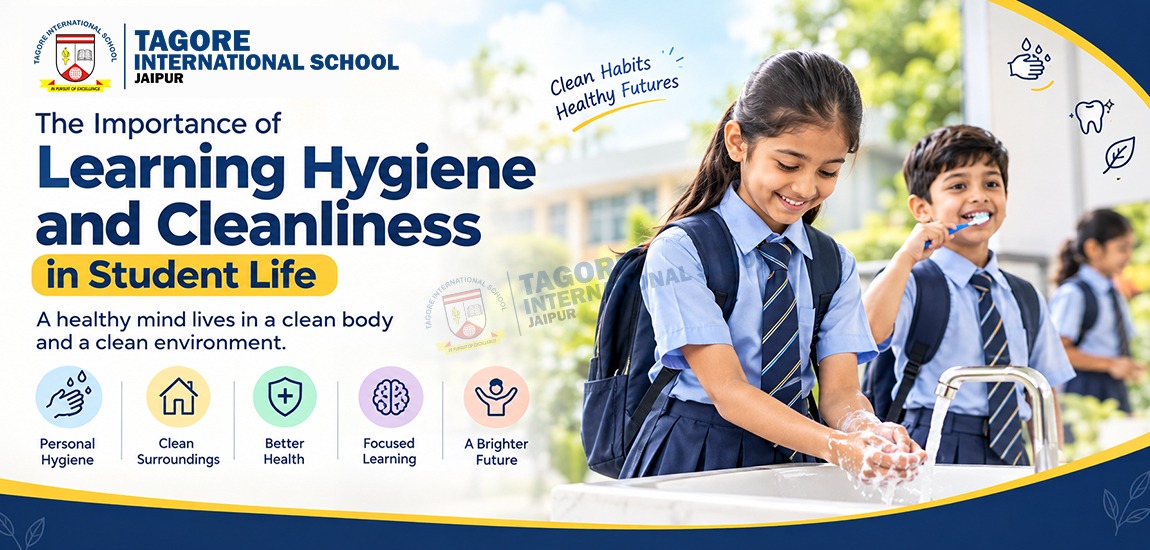
Personal hygiene is important to live a healthy life as our bodies come in regular contact with germs and dust. Practicing good personal hygiene helps in reducing the exposure to harmful germs which can lead to disease. There are simple habits that students can start following since early age like washing hands, brushing teeth and keeping our bodies clean. Personal hygiene not only contributes towards healthy living but also increases the confidence level.
Why Students Should Learn & Focus on Handwashing?
Handwashing is a simple and easy act which can make a huge difference to our overall well-being. Our hands touch different objects and surfaces which carry disease germs and micro-organisms. Washing helps in getting rid of these germs and avoiding contact with eyes, nose, or mouth.
Students should regularly wash their hands before eating food or while handling food.
They should always clean their hands after using the washroom, playing outdoors, coughing, sneezing, or touching dirt. The hands should be washed using soap and clean water thoroughly using the right technique.
The handwash includes cleaning the palms, fingers, fingertips, back of hands and areas surrounding the nails. If soap and water are not available then you can use a good quality hand sanitizer.
Maintaining Hygiene and Food Safety
Students should learn to maintain hygiene when it comes to handling food. They should avoid contaminated food or water and develop safe eating habits like washing fruits and vegetables before consuming. They should wash their hands before and after eating their lunch in school. Students should ensure that their lunch box and water bottles are cleaned on a regular basis.
You can read also:- Complete Guide to CBSE Admission Process in Jaipur
Ways of Maintaining Hygiene in the Classroom
There are different ways in which students can maintain hygiene in the classroom and keep it clean. There are certain common practices like keeping the desk clean, throwing garbage in dustbin, and keeping food items well-covered which can be followed by the students. Students should also avoid sharing personal items like water bottles, handkerchief or other personal items.
The classroom should always be kept well-ventilated as fresh air helps in creating a comfortable environment for both students and teachers. Teachers should encourage students to follow hygienic ways of living by conducting activities, competitions, and posters. Once a student learns it and practices it daily, it turns into a habit which is likely to help him in future.
How Students Can Keep the School Surroundings Clean?
School is a place where students of all age groups come to learn and grow. A clean environment ensures positivity and a pleasant atmosphere. Students can help in maintaining clean surroundings by using the dustbins, avoiding littering, and keeping their respective desks clean. It should be understood that keeping the school premises clean is not only the job of the cleaning staff but also every member who uses it whether teacher, student, or staff.
How Clean Surroundings Contribute Towards Healthy Minds?
Studying and living in a clean environment not only supports the physical health but also has a positive impact on the mental well-being of the students. A dirty environment keeps students distracted and lowers their concentration level. It may further lead to feelings of stress or discomfort. A well-managed and maintained environments allows students to concentrate on learning, exploring and growing. Such spaces make them feel safe, secure and peaceful.
How Students Can Contribute Towards Maintaining Cleanliness in School?
Students can contribute towards keeping the school environment clean in many ways.
- Always use a dustbin for disposing waste.
- Keep your respective desks and classrooms clean.
- Always flush after using the toilet.
- Participate in cleanliness campaigns.
- Follow personal hygiene.
- Do not litter.
Developing Lifelong Habit for a Successful Future
Students should not only learn but also practice good hygiene and cleanliness in their daily lives. This helps in making these parts of daily routine which will eventually turn into habits. These habits are likely to benefit students in the long run and help them in maintaining good health. What students learn during their childhood stays with them throughout their adulthood and help in living a successful life.
How Parents Can Contribute in Teaching About Cleanliness at Home?
Parents play a very important role in teaching children about maintaining hygiene and cleanliness. They can encourage children to keep their spaces organized, participate in cleaning activities, and follow hygienic practices like washing hands regularly. Children should learn the importance of waste management by separating the appropriate waste and reusing what can be reused or recycled.
How TIS Works on Developing These Habits in Students?
At Tagore International School, students are taught the importance basic hygiene and clean surroundings. They are encouraged to practice beneficial habits like washing hands, coming neatly dressed, keeping their belongings and surroundings clean and tidy. We work towards creating individuals who are responsible and move on to living a productive life.
Frequently Asked Questions (FAQs)
1. Why is learning hygiene important for students?
Ans. Maintaining hygiene is important as it helps students in protecting themselves from diseases. It promotes healthy living and overall well-being which helps in being productive. Learning and developing healthy habits during school stays lifelong.
2. How often should students wash their hands?
Ans. Students should wash their hands regularly especially before eating, after playing and using washroom. If they are suffering from cough and cold then also, they must wash their hands using soap and water after sneezing.
3. How can students help in keeping their school clean?
Ans. Students can help in keeping their school clean by using dustbins, avoiding littering, flushing after using the toilet and avoiding unnecessary wastage.
4. What is the difference between hygiene and cleanliness?
Ans. While hygiene is personal, cleanliness is about keeping the environment clean. Hygiene is about washing hands, brushing teeth and keeping oneself clean while cleanliness is about maintaining clean surroundings.
5. How can schools promote hygiene and cleanliness among students?
Ans. Schools can teach students about hygiene and cleanliness through activities, discussions, competitions, campaigns, and encouraging them towards practicing these habits in daily routine.